Why Trust AllQbanks? We help thousands of IMGs and medical students prepare for the exams every year. Read our Editorial Policy.
Everyone tells you to "start early" and "do lots of questions." Thanks—very helpful.
What nobody gives you is a week-by-week MCCQE (formerly MCCQE Part 1) study plan that accounts for the 2026 all-MCQ format, realistic time constraints, and the specific resources that actually move the needle.
That changes here.
This study plan is designed for the most common scenario: 3 months of dedicated preparation before a 2026 exam session. Whether you're targeting the April–May, August–September, or October window, the structure adapts. We'll cover what to study, when to study it, and how to know when you're ready.
MCCQE Exam Sessions
Before building your plan, pick your target session. For the complete, up-to-date schedule including 2027 sessions and registration deadlines, read our guide to the 2026-2027 MCCQE exam dates and registration.
| Session | Dates | Start Prep By |
|---|---|---|
| April–May | Apr 22 – May 27, 2026 | January |
| August–September | Aug 19 – Sep 16, 2026 | May |
| October | Oct 1 – Oct 21, 2026 | July |
Book early—seats fill fast, especially at major Canadian testing centres.
Who This Study Plan Is For
This plan works for:
- Canadian medical students (MS3/MS4) with clinical rotations behind them
- International Medical Graduates (IMGs) studying full-time or part-time
- Residents preparing alongside training
If you're working full-time, extend the timeline to 4–5 months and reduce daily targets proportionally. The order and structure stay the same.
The 3-Month Framework: Overview
Month 1: Foundation (Weeks 1–4)
  → Content review + diagnostic questions

Month 2: Active Practice (Weeks 5–8)
  → Heavy MCQ practice + targeted review

Month 3: Simulation & Refinement (Weeks 9–12)
  → Full-length exams + weak area focus
Here's what each phase looks like in detail.
Month 1: Build Your Foundation (Weeks 1–4)
Goal: Cover all major clinical domains systematically. Identify your strongest and weakest areas.
Daily time commitment: 3–4 hours
Week 1–2: Core Medicine and Surgery
These two domains make up the largest portion of the exam. Start here.
Focus areas:
- Cardiology: chest pain workup, ACS management, heart failure, arrhythmias
- Respirology: dyspnea, COPD, asthma, pneumonia
- GI: abdominal pain, GI bleeding, liver disease
- General surgery: acute abdomen, trauma assessment, pre-op evaluation
Daily routine:
- Review (2 hours): Read through one system per day using Toronto Notes or equivalent
- Questions (1 hour): Do 25–30 MCQs on today's topic to test retention
- Review mistakes (30 min): Deep-dive on every wrong answer
Pro Tip: Don't just read passively. After each section, close the book and write down the 5 most important clinical decision points from memory. This active recall is what actually builds exam-ready knowledge.
Week 3: Pediatrics, OB/GYN, and Psychiatry
Focus areas:
- Pediatrics: developmental milestones, common pediatric emergencies, vaccinations (Canadian schedule)
- OB/GYN: prenatal screening, labour management, common gynecological presentations
- Psychiatry: depression, anxiety, psychosis, substance use, capacity assessment
Same daily routine as weeks 1–2.
Week 4: Public Health, Ethics, and Canadian-Specific Content
This is where many candidates—especially IMGs—lose easy marks.
Focus areas:
- Biostatistics and epidemiology: sensitivity, specificity, NNT, study design, bias
- Canadian medical ethics: MAID, informed consent, capacity, mandatory reporting
- CanMEDS roles: communicator, collaborator, health advocate, professional
- Preventive medicine: Canadian screening guidelines (cervical, breast, colon, lung)
- Public health: notifiable diseases, pandemic response, social determinants of health
End of Month 1 checkpoint: Take a timed 50-question diagnostic quiz covering all domains. Record your scores by topic. This is your baseline.
| If You're Scoring... | What It Means |
|---|---|
| 70%+ overall | On track — proceed to Month 2 |
| 50–70% overall | Review weak areas from Month 1 for 3–5 extra days before moving on |
| Below 50% | Consider extending to a 4-month timeline |
Month 2: Active Practice (Weeks 5–8)
Goal: Build speed, accuracy, and pattern recognition through heavy question practice.
Daily time commitment: 4–5 hours
Daily Routine (Weeks 5–8)
| Activity | Time | Details |
|---|---|---|
| MCQ Block 1 | 90 min | 50 timed questions (1.4 min/question — exam pace) |
| Review Block 1 | 60 min | Analyze every wrong and flagged question |
| Content Review | 60 min | Targeted review of weak areas from questions |
| MCQ Block 2 | 60 min | 30 untimed questions on today's weak topic |
| Review Block 2 | 30 min | Quick review of Block 2 mistakes |
Weekly question targets:
- Week 5–6: 350–400 questions per week
- Week 7–8: 450–500 questions per week
Resource Strategy for Month 2
This is where your question bank choice matters most. You need:
- Enough questions to sustain 4+ weeks of heavy practice without repetition
- MCCQE-specific content aligned with MCC objectives
- Detailed explanations that teach, not just tell you the right answer
With AllQbanks' 5,200+ questions, you'll never run out of fresh material. The adaptive exam builder automatically identifies your weak MCC objectives and generates targeted practice — no manual tracking needed.
If you're using a smaller question bank (2,000–3,000 questions), you'll likely start repeating questions by week 7. That's a problem because recognizing an answer you've seen before isn't the same as reasoning through a clinical scenario.
Track Your Performance
Create a simple spreadsheet or use your qbank's analytics:
| Domain | Week 5 | Week 6 | Week 7 | Week 8 | Trend |
|---|---|---|---|---|---|
| Internal Medicine | 65% | 68% | 72% | 75% | ↑ |
| Surgery | 60% | 64% | 66% | 70% | ↑ |
| Ethics/Public Health | 55% | 62% | 68% | 73% | ↑ |
| OB/GYN | 70% | 72% | 74% | 76% | ↑ |
| Psychiatry | 72% | 74% | 75% | 78% | ↑ |
If any domain isn't trending upward, dedicate extra time to it during content review blocks.
End of Month 2 checkpoint: Take a timed 115-question block (half an exam). Your target: 65%+ overall with no domain below 55%.
Month 3: Simulation and Refinement (Weeks 9–12)
Goal: Train endurance, refine test-taking strategy, and eliminate remaining weak spots.
Daily time commitment: 4–5 hours (with 2–3 full simulation days)
Week 9–10: Full-Length Simulations
The 2026 MCCQE format is 230 MCQs split across two sessions with a 45-minute lunch break. You need to experience this before exam day.
Simulation schedule:
- Week 9: One full 230-question simulation under exam conditions
- Week 10: Second full simulation
Simulation rules:
- Start at the same time as your actual exam
- No phone, no breaks during sessions
- Use the MCCQE exam simulation feature for realistic practice
- Track exactly where fatigue hits (usually around question 150–180)
After each simulation, spend 1–2 days reviewing:
- Questions you got wrong (why?)
- Questions you got right but flagged (was it a guess?)
- Your pacing: did you run out of time?
Week 11: Targeted Weak Area Blitz
Based on your simulation results, identify your 3–5 weakest topics and attack them specifically.
Example weak area protocol:
- Re-read the relevant chapter/section
- Do 50 targeted questions on that topic
- Review all mistakes
- Do 30 more questions the next day
- If still below 65%, repeat one more cycle
Don't try to learn new material at this stage. Focus on strengthening what you already know but keep getting wrong.
Week 12: Rest and Light Review
This week is about peak performance, not cramming.
| Day | Activity |
|---|---|
| Monday | Light review of high-yield topics (30 min blocks) |
| Tuesday | 50 mixed questions — easy pace, no pressure |
| Wednesday | Review ethics/public health quick reference sheet |
| Thursday | Rest day — exercise, sleep, decompress |
| Friday | Light review of flagged notes only |
| Saturday | Rest day |
| Sunday | Exam day |
The biggest mistake in this final week is panic-studying. If you followed the plan, you're ready. Trust the process.
Study Plan Adjustments by Situation
For IMGs Studying Part-Time (4–5 Month Plan)
Extend Month 1 to 6–8 weeks. Reduce daily question targets to 30–50. Add extra focus on Canadian-specific content (ethics, guidelines, public health) since this is where IMGs typically lose the most marks.
For the complete pathway from credentials to licensure, see our IMG Canada guide.
For Residents in Training
You have a clinical advantage — use it. Shorten Month 1 to 2 weeks (skim content, focus on knowledge gaps). Spend more time on formal question practice since you already see patients daily.
For Repeat Test-Takers
Skip broad content review. Analyze your previous score report to identify weak domains. Spend Month 1 doing questions only in those domains. Then follow Months 2–3 as written.
Essential Resources Checklist
Primary study resources:
- Comprehensive MCCQE question bank (5,000+ questions recommended)
- Official MCC practice exam (take first for baseline)
- Free MCCQE practice questions to warm up before committing to a paid qbank
- Toronto Notes or equivalent review book
- Canadian clinical practice guidelines
Study tools:
- Spaced repetition app (Anki) for high-yield facts
- Performance tracking spreadsheet or built-in analytics
- Timer for pacing practice
For the full breakdown of available question banks and how to choose, see our Best MCCQE Qbanks 2026 comparison.
Frequently Asked Questions
How many practice questions should I do before the MCCQE?
Aim for 2,500–3,500 practice questions total over your preparation period. This provides enough exposure to cover MCC objectives thoroughly while allowing time for meaningful review. Quality matters — 50 questions with deep analysis beats 150 questions skimmed through. Track your performance by topic to ensure balanced coverage.
Is 3 months enough to prepare for MCCQE?
For most Canadian medical students, yes — 3 months of focused preparation (3–5 hours daily) is sufficient. IMGs or those with significant knowledge gaps should plan for 4–6 months. The key factor isn't time alone but consistency. Studying 3 hours daily for 12 weeks beats studying 8 hours daily for 4 weeks, because spaced repetition produces better long-term retention.
Should I use UWorld for MCCQE?
UWorld Step 2 CK builds excellent clinical reasoning skills, but it's designed for the USMLE — not the MCCQE. It contains no Canadian ethics, CanMEDS, or Canadian guidelines. If you're only taking the MCCQE, an MCCQE-specific qbank is more efficient. If you're taking both USMLE and MCCQE, use UWorld for USMLE prep and a Canadian qbank for MCCQE-specific content.
What's the best way to study Canadian ethics for MCCQE?
Canadian medical ethics is a high-yield and frequently tested topic. Focus on: MAID eligibility criteria and safeguards, capacity assessment, informed consent, mandatory reporting obligations, CMPA guidelines on confidentiality, and the CanMEDS framework. Use official CMPA resources alongside your qbank's ethics questions for targeted practice.
When should I start doing full-length practice exams?
Begin full-length simulations (230 questions) in week 9 of a 12-week plan — no earlier. Starting simulations too soon leads to discouragement from low scores, while waiting too late means you never train for endurance. You should complete at least 2 full simulations before exam day.
Your Next Step
Stop planning. Start studying.
Pick your exam session. Count back 12 weeks. Start on Day 1 of this plan.
The MCCQE rewards consistent, structured preparation — not last-minute cramming. Every week you follow this plan puts you closer to the score you need.
Related Posts
 mccqe
mccqeMCCQE Substance Use Disorders: High Yield Must-Knows
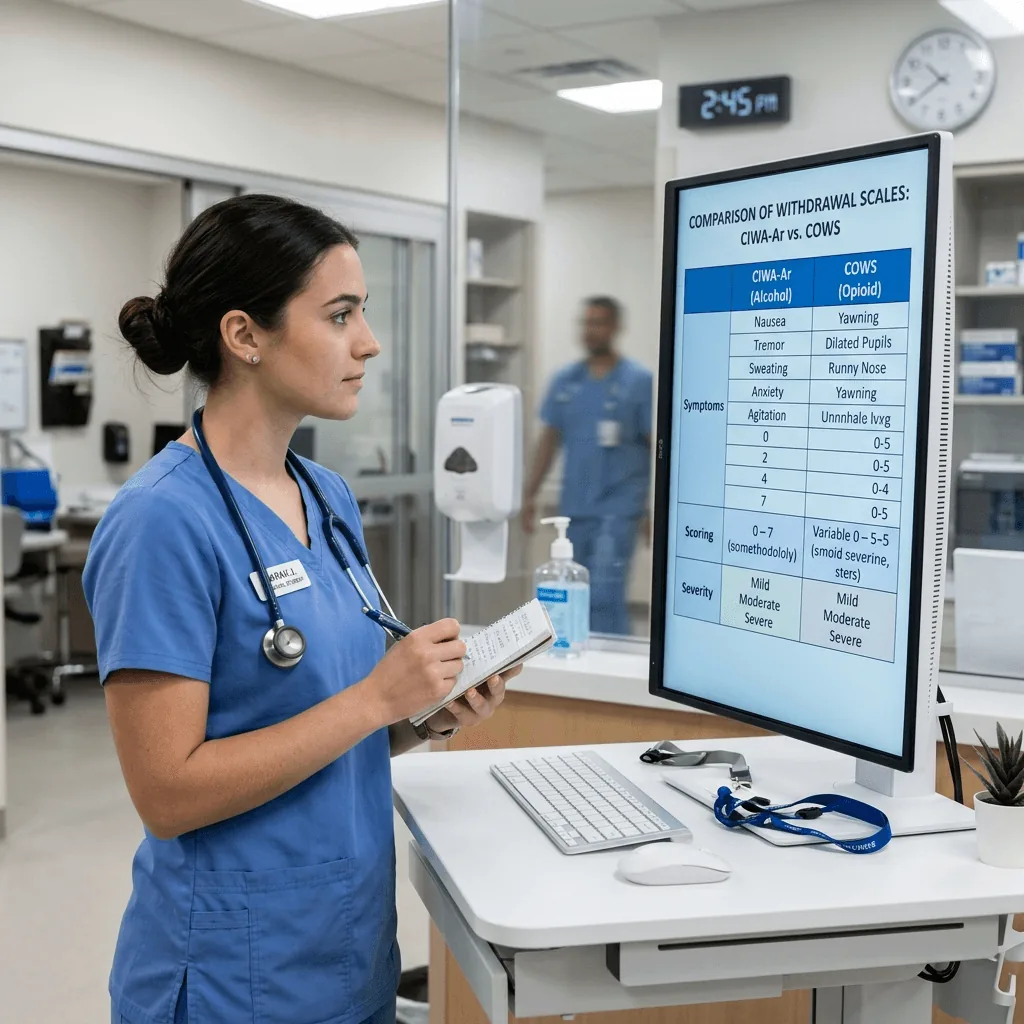
Master substance use and withdrawal protocols on the 2026 MCCQE Part 1: CIWA-Ar and COWS scoring, naloxone guidelines, and first-line treatments.
Dr. Leila Haddad •
Jul 18, 2026
![MCCQE vs USMLE: 7 Key Differences for Test Takers [2026]: feature image](/img/mccqe-vs-usmle.webp) mccqe
mccqeMCCQE vs USMLE: 7 Key Differences for Test Takers [2026]
MCCQE Part 1 and USMLE Step 2 CK share about 65% of content. The other 35% will trip you up. Side-by-side comparison of format, scoring, and content —.
Dr. Leila Haddad •
Feb 18, 2026